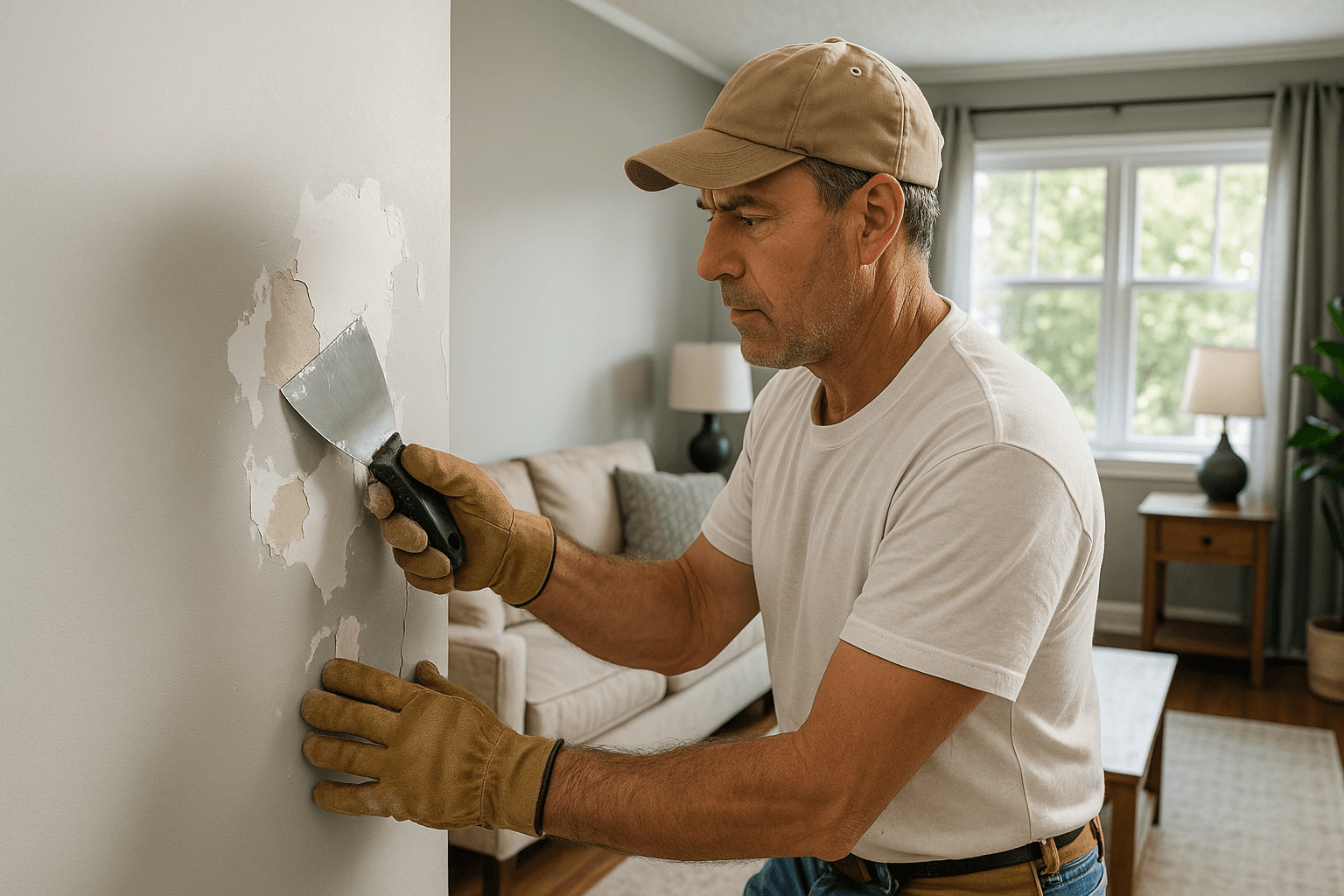
You know that feeling when you decide to rearrange the living room furniture, only to discover a jagged hole behind the couch where the doorknob slammed into the wall three years ago? Or maybe you’re just tired of staring at those hairline cracks that seem to appear out of nowhere every time the seasons change here in Chandler. It happens to the best of us, and honestly, your walls are usually the last thing you think about until something goes wrong.
Wait, Why Is My Wall Cracking?
Here’s the thing about living in the East Valley: the ground moves. Not like an earthquake, but our soil expands and contracts with the moisture and the heat. When you combine that with the way houses settle over time, drywall stress cracks are pretty much inevitable. It’s the house breathing, in a way. But that doesn’t mean you have to live with it.
Drywall isn’t just the white stuff between you and the insulation; it’s the canvas of your home. When it’s pristine, you don’t notice it. When it’s damaged? It’s the only thing you see. It’s funny how a tiny nail pop can suddenly look like a crater when you’re trying to impress guests.
I’ve walked into plenty of beautiful homes in Chandler that are immaculate, except for that one patch of bumpy wall where someone tried to DIY a repair and didn’t quite nail the texture. We call that the “landlord special,” but let’s make sure you don’t end up with that look.
The “Oops” Moments: Common Damage We See
Before we get into the nitty-gritty of fixing things, let’s identify what usually goes wrong. It’s rarely structural failure; it’s usually life happening.
- The Doorknob Punch: This is classic. No doorstop, angry teenager, or just a heavy draft—bam, hole in the wall.
- Furniture Scuffs and Gouges: Moving that heavy dresser without a helper? Yeah, the corner probably took a chunk out of the hallway.
- Water Stains: This is the scary one. If you see a brown ring on your ceiling or wall, drywall repair is secondary. You need to fix the leak first.
- Settling Cracks: Usually found above door frames or windows. They look like jagged lightning bolts.
You might look at these and think, “I can fix that in five minutes.” And you might be right. But getting it to look like it never happened? That’s where the art comes in.
Gathering Your Arsenal: Tools You Actually Need
If you’re going to tackle a small patch job, don’t just grab a tub of spackle and a butter knife. You need the right gear. It’s like cooking; you can’t make a gourmet meal with a plastic spoon.
| Tool | What It Does | Pro Tip |
|---|---|---|
| Joint Compound | The mud. Fills the holes. | “Hot mud” (setting type) dries faster but is harder to sand. Stick to all-purpose for DIY. |
| Putty Knife | Spreads the mud. | Get a 4-inch and a 6-inch blade. Flexibility is key. |
| Sanding Sponge | Smooths it out. | Get a medium/fine grit. Don’t use heavy sandpaper or you’ll tear the paper. |
| Fiberglass Mesh Tape | Bridges cracks/holes. | Easier to use than paper tape for beginners because it’s self-adhesive. |
Quick digression: Please, for the love of all that is holy, do not use toothpaste to fill nail holes. I know it’s an old college dorm trick, but ants love it, and it shrinks. Just get a small tub of spackle.
The California Patch: A Handyman’s Secret
If you have a hole that’s roughly the size of a doorknob or slightly larger, you don’t necessarily need to cut a new piece of drywall and screw it into a stud. We use a technique often called the “California Patch” or “Hot Patch.”
Here is the gist of it:
- Cut the Square: Cut a square piece of new drywall slightly larger than the hole.
- Score the Back: Score the back paper of your new piece about an inch from the edge on all sides.
- Snap and Peel: Snap the gypsum (the white rock part) but leave the front paper intact. Peel the gypsum off the edges. Now you have a square plug with a paper flange around it.
- Butter it Up: Put joint compound on the back of the paper flange and around the hole in the wall.
- Press it In: Fit the plug into the hole and squeegee the paper flat against the wall with your knife.
It sounds complicated when I write it out, doesn’t it? But once you do it, you realize it eliminates the need for tape and creates a super strong bond. It’s a great trick for small drywall repairs where you don’t have backing behind the hole.
The Texture Trap: Where DIY Dreams Die
Okay, here is the hard truth. Patching the hole is the easy part. The sanding? Dusty, but doable. The texture? That is where most homeowners in Chandler hit a wall (pun intended).
Most homes here in the East Valley have one of two textures: Knockdown or Orange Peel.
Orange Peel looks like the skin of an orange—bumpy but soft. Knockdown looks like flattened islands of mud. If you patch a hole and leave it perfectly smooth, it sticks out like a sore thumb. It catches the light differently. It screams, “I was fixed!”
You can buy those spray cans of texture at the hardware store. They can work, but they are temperamental.
- Shake the can. Then shake it some more.
- Test it on cardboard first. Seriously. The nozzle pressure changes everything.
- Less is more. You can always add texture, but scraping it off after it dries is a nightmare.
If you have knockdown texture, you have to spray the blobs on, let them set for about 10-15 minutes, and then gently wipe across them with a wide knife to flatten them. It’s all about timing. Too wet? You smear it. Too dry? It won’t flatten.
Is It Just a Crack, or Is the House Falling Down?
I get asked this a lot. “Is this crack dangerous?”
Usually, no. Vertical cracks or cracks following the drywall seams are typically just settling or poor tape application from when the house was built. However, if you see a crack that is wide enough to fit a coin in, or if one side of the wall is jutting out past the other, that’s a different story.
Also, horizontal cracks in the middle of a wall can sometimes indicate foundation issues. In Chandler, with our expansive clay soil, foundation shifts are real. If you’re worried, it doesn’t hurt to get it checked. But 99% of the time, it’s just cosmetic annoyance.
The Dust Factor
Let’s be real for a second. Drywall work is messy. Gypsum dust is finer than flour. It gets everywhere. It travels through air vents. It settles on your cat three rooms away.
When we come into a home, we prep. We put down plastic. We use vacuums attached to our sanders. If you are doing this yourself, close the door to the room you’re working in and put a towel under the crack. Wear a mask. You don’t want to be breathing that stuff in; it turns to sludge in your lungs.
When to Throw in the Towel and Call a Pro
Look, I’m all for self-reliance. It feels good to fix your own house. But there are times when it’s just not worth the headache.
- Ceilings: Working overhead is exhausting. Gravity is working against you, and dropping wet mud on your face is a rite of passage you probably want to skip.
- Large Holes: If you fell through the attic ceiling (it happens more than you think), that’s a big sheet replacement. That involves heavy lifting, cutting around outlets, and massive amounts of taping.
- Water Damage: If the drywall is soft or mushy, it has to go. And you have to be sure the mold isn’t growing behind it. We know what to look for.
- High-Traffic Areas: If the damage is right in the entryway where everyone looks, do you really want to risk a wavy, mismatched patch?
Why East Valley Handyman?
We aren’t a big, faceless franchise. We live here. We know the specific types of texture used in Chandler homes built in the 90s versus the ones built last year. We understand that drywall repair isn’t just about plugging a hole; it’s about restoring the integrity of your room.
We take pride in the “invisible repair.” The goal is that when we leave, you can’t tell we were ever there—except for the lack of a hole, of course. We treat your home like ours. We don’t track mud in, we clean up our dust, and we don’t leave you hanging halfway through a job.
Whether it’s a few nail pops that are driving you crazy or a massive hole from a Plumbing repair, we handle it with the same level of care. You have better things to do than spend your Saturday covered in white dust, fighting with a texture can that won’t spray right.
Let’s Get That Wall Smooth Again
Your home deserves to look its best, and you deserve a stress-free experience. If you’re ready to say goodbye to those cracks, holes, and unsightly patches, give us a shout. We’re ready to help you reclaim your space.
Call us today at 480-500-6935
[Request a Free Quote Here]