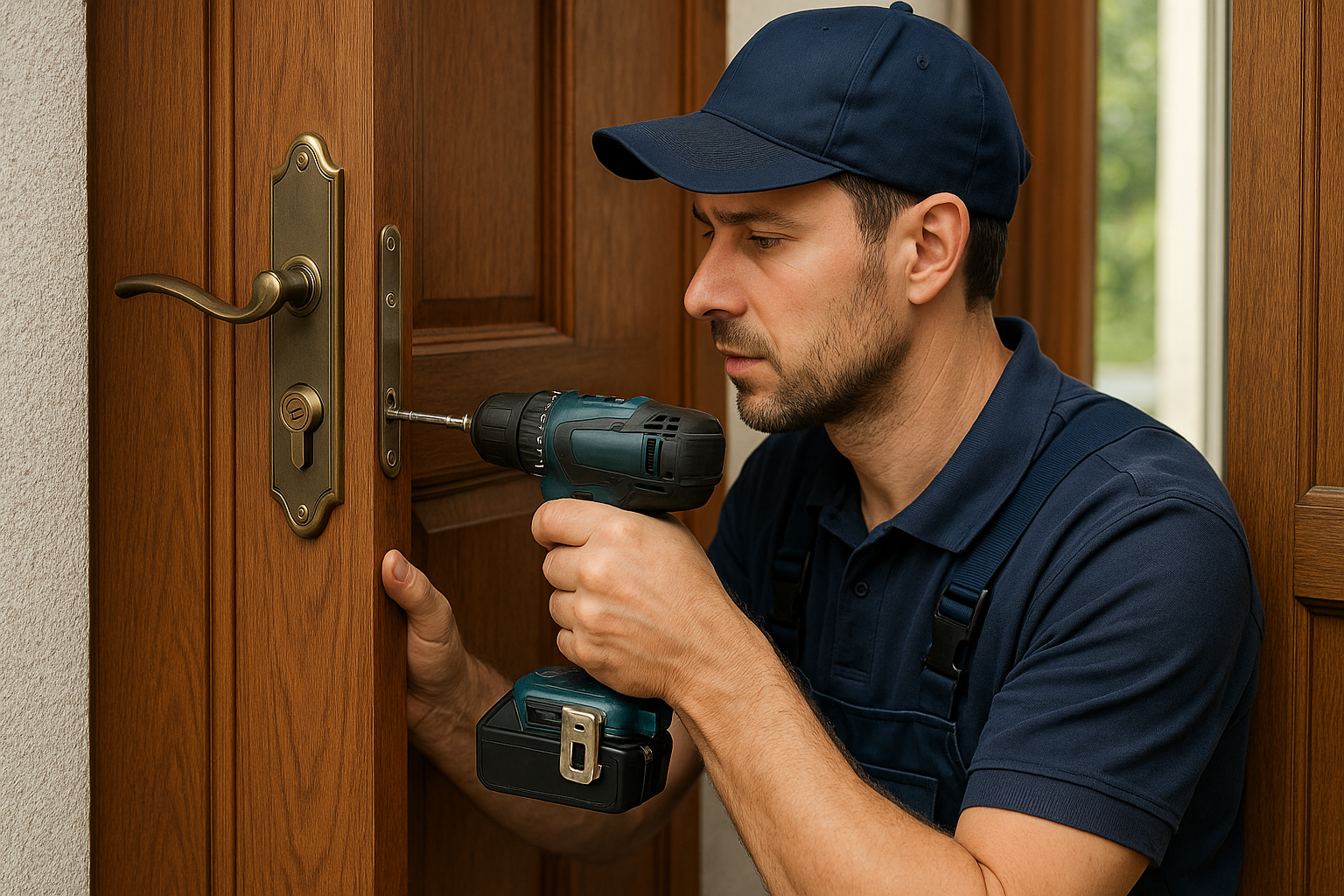
You know what? We rarely think about our doors until they stop working right, usually right in the middle of a scorching Chandler summer. Suddenly, that front door refuses to latch, letting all your precious air conditioning escape into the Arizona heat. Honestly, fixing a stubborn door is a bit of an art form, and it is a craft we practice every single day here in the East Valley.
When Good Doors Go Bad
Here’s the thing. A door seems like a pretty simple piece of wood or fiberglass hanging on some metal hinges. You push, it opens. You pull, it closes. But the truth is, a properly hung door is a delicate balancing act of physics, gravity, and geometry.
Let me go off on a quick tangent about our weather. When monsoon season hits Chandler, the humidity spikes out of nowhere. Wood absorbs that sudden moisture like a dry sponge. Then, a few days later, we are back to bone-dry 110-degree heat. This relentless expansion and contraction cycle wreaks absolute havoc on your home’s entryways.
Have you ever had to throw your shoulder into your bedroom door just to get it to shut? That is not just annoying; it is a cry for help from your door frame. Professional door repair is about listening to those cries and knowing exactly where to adjust.
The Sneaky Culprits Behind the Squeaks and Rubs
Let me explain what is actually happening behind the scenes. Most folks assume a sagging door means the hinges are just getting old. Sometimes that is true, but often, the root problem runs deeper into the wall itself.
We use terms like plumb, level, and square in the carpentry world. If a door frame is out of plumb—meaning it leans slightly forward or backward—the door is going to swing open or closed all by itself. Ghost door, anyone? It is spooky, but it is just gravity pulling on an uneven frame.
Then you have the strike plate. That is the little metal piece on the frame where the latch catches. If your house settles even a fraction of an inch—and let’s face it, the soil out here in Maricopa County shifts a lot—that latch and strike plate lose their sync entirely. Suddenly, you find yourself pulling upward on the handle while pushing with your knee to lock the deadbolt.
And honestly, do not even get me started on stripped hinge screws. That is a whole different headache.
The Stripped Screw Epidemic and DIY Mishaps
You have probably tried the classic toothpick trick. You take a stripped screw out, shove a few wooden toothpicks and some wood glue into the hole, and drive the screw back in. It is a famous quick fix.
Does it work? Sometimes. Sure, for a little while.
But a solid-core exterior door weighs an absolute ton. Over time, those brittle little toothpicks just crush under the heavy weight. When we get called out for residential door repair in Chandler, we usually find ourselves fixing these DIY fixes first.
Before you grab the tool belt, consider why some common DIY door fixes backfire:
- Over-tightening screws: It seems logical to crank down on a loose screw, but this strips the wood grain completely, leaving you with a screw that spins endlessly.
- Using the wrong lubricants: Spraying standard penetrating oil on a squeaky hinge might quiet it for a day, but it attracts desert dust like a magnet, creating a messy black sludge over time. We prefer dry graphite or silicone-based sprays.
- Ignoring the root cause: Sanding down the top of a door because it rubs the frame ignores the fact that the house might be settling. You are treating the symptom, not the actual disease.
Instead of toothpicks, we use a much better approach. We drill out the old hole entirely, glue in a solid hardwood dowel, and start fresh with a 3-inch deck screw. That long screw bites straight through the jamb and into the king stud framing of the house. It takes a few extra minutes, but your door is not going to sag again anytime soon.
Oh, and the tools definitely matter. We are not just using a rusty manual screwdriver. We bring in precision levels, special hinge-bending tools, and sometimes a heavy-duty Makita router to deepen a hinge mortise so everything sits perfectly flush.
Decoding Your Door’s Love Language
Doors actually communicate through friction. If you look closely at the edges of your door, you can usually see exactly where the problem hides. Look for dark scuff marks on the paint or areas where the wood looks completely bare.
Here is a quick cheat sheet for what your door is trying to tell you:
| Symptom You Notice | What It Usually Means | How We Fix It |
|---|---|---|
| Rubbing at the top corner | Top hinge is loose or binding | Replace screws, adjust hinge mortise |
| Latch misses the hole | House settling or frame shifted | Move the strike plate, shim hinges |
| Drafts coming in from below | Worn out bottom sweep | Cut and install a heavy-duty sweep |
It is funny how much money you can lose under a badly sealed front door. During a classic Arizona heatwave, a tiny gap at the bottom of your entryway acts like a vacuum. It sucks your cold, paid-for air right out into the neighborhood. Replacing weatherstripping and adjusting the threshold is one of those small investments that practically pays for itself in lower summer cooling bills.
The Sliding Glass Door Dilemma
We cannot talk about East Valley homes without mentioning sliding glass doors. Almost every house out here has a patio slider leading out to the backyard or the pool.
These doors have their own secret lives entirely. They glide on small nylon or steel rollers hidden inside the bottom frame. Over time, blowing desert dust, pet hair, and dirt build up inside that bottom track. The rollers get gummed up, and eventually, they flatten out or seize completely.
When that happens, you are no longer rolling the door. You are dragging a heavy pane of glass across a metal track. It screeches, it grinds, and it takes two hands just to open it enough to let the dog out.
Replacing slider rollers is a heavy, awkward job. You have to lift the entire glass panel out of the frame, lay it flat, and dismantle the bottom rail. It is a sweaty process, but the result is amazing. A sliding door with fresh rollers and a clean track will glide open with just the push of a single finger. It feels like magic.
The Subtle Art of Shims and Planing
Let’s talk about the pure craftsmanship side of things. Hanging a new door, or repairing a heavily damaged one, requires incredibly tight tolerances. We are talking about gaps—what we call the reveal—of about an eighth of an inch all the way around the door.
When the reveal is uneven, the door looks totally crooked, even if it manages to close shut.
Getting that gap perfect requires wooden shims. These are thin, wedge-shaped pieces of cedar or pine. We slide them between the door jamb and the rough opening of the wall. By tapping a shim in just a millimeter more, we can tilt the entire door frame to make it perfectly level. It is highly detailed, patient work. You tap, you check the level, you check the swing, you tap again.
If the door itself is physically too big for the frame because of summer swelling, we might need to break out a hand planer. Planing involves shaving off paper-thin ribbons of wood from the edge of the door until it cleanly clears the jamb. It smells like fresh sawdust and honestly, it is one of the most satisfying parts of our workday.
But you really have to be careful here. Shave off too much wood, and you end up with a massive gap when the winter rolls around and the wood shrinks back down. It takes a practiced eye to know exactly when to stop cutting.
Interior vs. Exterior: A Tale of Two Doors
Interior hollow-core doors are lightweight and relatively forgiving. If a kid swings on the handle of a bedroom door, it might pull the hinges loose, but it remains a straightforward fix.
Exterior doors? They are a whole different animal entirely.
Your front door, the garage entry door, and those heavy French patio doors have to endure brutal conditions. They take direct UV punishment from the Arizona sun, blowing dust, and constant temperature swings. The hardware on these doors is heavier, the weather seals are much thicker, and the security requirements are much higher.
If your deadbolt does not line up perfectly, your home is not fully secure. You do not ever want to force a key into a stubborn deadbolt. That puts unnecessary stress on the internal lock mechanism, and eventually, the key will just snap right off in your hand. Trust me, extracting a broken piece of metal from a lock while you are stranded outside in 105-degree heat is not a fun afternoon.
Getting Things Back in Swing
You know, a lot of people just live with annoying doors for years. They get used to lifting the heavy handle, or doing that weird hip-bump thing just to get the pantry door closed.
But you really do not have to live like that.
A smooth, perfectly balanced door is a small joy in everyday life. When it latches with a crisp, effortless click, it just feels right. It makes your whole house feel sturdier, quieter, and more put-together.
Whether you have a bathroom door that refuses to stay open, a front door that is letting the hot air inside, or a patio slider that feels like it weighs five hundred pounds, we can help get it sorted out completely. The crew at East Valley Handyman has seen it all. We have fixed vintage wood doors in historic neighborhoods and adjusted brand-new fiberglass entryways that just were not installed quite right the first time.
Stop fighting with your house every time you want to leave a room. If you need reliable, honest Handyman Services in Chandler, AZ, we are right around the corner. Let us handle the heavy lifting, the hinge bending, and the strike plate adjusting so you can go back to simply enjoying your home.
Ready to finally fix that stubborn door? Give us a call directly at 480-500-6935 to chat about what is going on. Alternatively, you can always Request a Free Quote right here on our website to get the process started. We would love to help you out!