There is a massive difference between building a slightly lopsided birdhouse in your garage on a Sunday and actually making a steady living as a professional carpenter. Honestly, stepping out of the hobbyist shadow to run a profitable, full-time operation takes a whole lot of grit, sawdust, and sheer stubbornness. For those of us swinging hammers out here in Chandler, AZ, turning a true passion for woodworking into a reliable paycheck is a wild, incredibly rewarding ride.
The Leap from Weekend Warrior to Full-Time Pro
You know what? A lot of folks think doing carpentry for a living just means getting paid to play with expensive power tools all day. I genuinely wish it were that simple. When you transition from a weekend warrior to a full-time Carpentry Handyman, the reality hits you fast. You are no longer just cutting pine boards for fun; you are solving serious structural problems for people who trust you with their biggest asset.
Let me explain how that shift actually feels. Your favorite, stress-free hobby suddenly involves balancing budgets, sourcing quality lumber, and managing client expectations. It is tough. You quickly realize that physically cutting wood is only about twenty percent of the job. The rest is planning, driving, estimating, and communicating.
I remember my first real paid gig. I spent hours agonizing over a simple baseboard joint, convinced the client would notice a microscopic gap in the corner. Turns out, a little painter’s caulk hides a multitude of sins—but that relentless drive for perfection? That is exactly what separates the passionate pros from the guys just trying to make a quick buck.
Finding the Sweet Spot: Services That Actually Pay the Bills
To actually turn this passion into profit, a handyman has to figure out what services keep the phone ringing consistently. You cannot survive on building one-off custom dining tables alone. They take weeks to complete, and frankly, finding buyers willing to pay for that level of craftsmanship is a grind. The real secret is mixing high-value projects with everyday, reliable home maintenance tasks.
Here is the thing. Homeowners typically call a local handyman service for a few specific reasons. They want things fixed, they want things upgraded, or they just want unfinished spaces to finally look complete.
| Service Type | Client Demand | Profitability |
|---|---|---|
| Custom Trim & Crown Molding | High (Everyone loves aesthetic upgrades) | Excellent |
| Deck & Gate Repairs | Very High (Especially after monsoons) | Moderate to High |
| Built-in Shelving & Cabinetry | Medium (Requires more design time) | Very High |
When you focus your energy on these core areas, you build a sustainable, recurring business. Take crown molding, for instance. Hanging it requires a mastery of coping joints and compound miter cuts. It sounds complicated, right? Basically, it just means cutting the wood at funky, precise angles so it fits perfectly into the imperfect corners of a room. It takes extreme patience, but homeowners absolutely love the elegant look it brings to a living space.
The Illusion of the Five-Minute Fix
A huge part of making a living in this trade is managing what I like to call the “five-minute fix” illusion. You probably know the scenario. A client calls and says a bedroom door is just sticking a little bit at the top. They think it just needs a quick sanding. But when you arrive, you realize the house has settled, the door frame is totally out of plumb, and the hinges are completely stripped out.
Handling these situations separates the amateurs from the veterans. A true craftsman approaches the problem systematically:
- Diagnosing the root cause: A dedicated professional doesn’t just shave the top off the door and leave. We check the structural integrity first to see why the frame shifted.
- Educating the homeowner: We have to explain, gently, why a seemingly quick fix actually requires resetting the entire door jamb.
- Delivering lasting results: It takes longer, sure, but fixing it properly means that door will not stick again next season.
This is exactly where the business side meets the craftsman side. You have to charge for your hard-earned expertise, not just your time on the clock.
Arizona Weather Plays by Its Own Rules
If you are going to make a living doing professional home repair in Chandler, you have to respect the desert. The climate here is practically a secondary boss you have to defeat on every single job. Wood is exactly like a sponge. It swells up when it is humid and shrinks down when it is dry. Out here, where the humidity is usually hovering somewhere around zero, lumber dries out fast and gets incredibly brittle.
Try driving a framing nail into a piece of sun-baked oak without drilling a pilot hole first. I dare you. The wood will split right down the middle with a loud, aggressive crack.
And then there is the intense heat. Working outside in July means your measuring tape is hot enough to brand cattle, and your wood glue dries before you can even clamp the pieces together. You quickly learn to adapt to the environment. You schedule your exterior repairs—like fixing gates or patching up patio covers—before the sun completely melts the neighborhood. Then, you retreat indoors to tackle interior carpentry projects during the brutal afternoon hours. It is just the reality of the trade in the Valley of the Sun.
The Hidden Costs of Doing Things Right
Now, let’s talk about the gear for a second. You don’t need expensive tools to be a great carpenter. Well, actually, wait. Let me walk that back a bit. A master craftsman can absolutely do beautiful work with a rusty handsaw and a prayer, but you do need reliable, high-quality tools if you want to run a profitable business. Time is money.
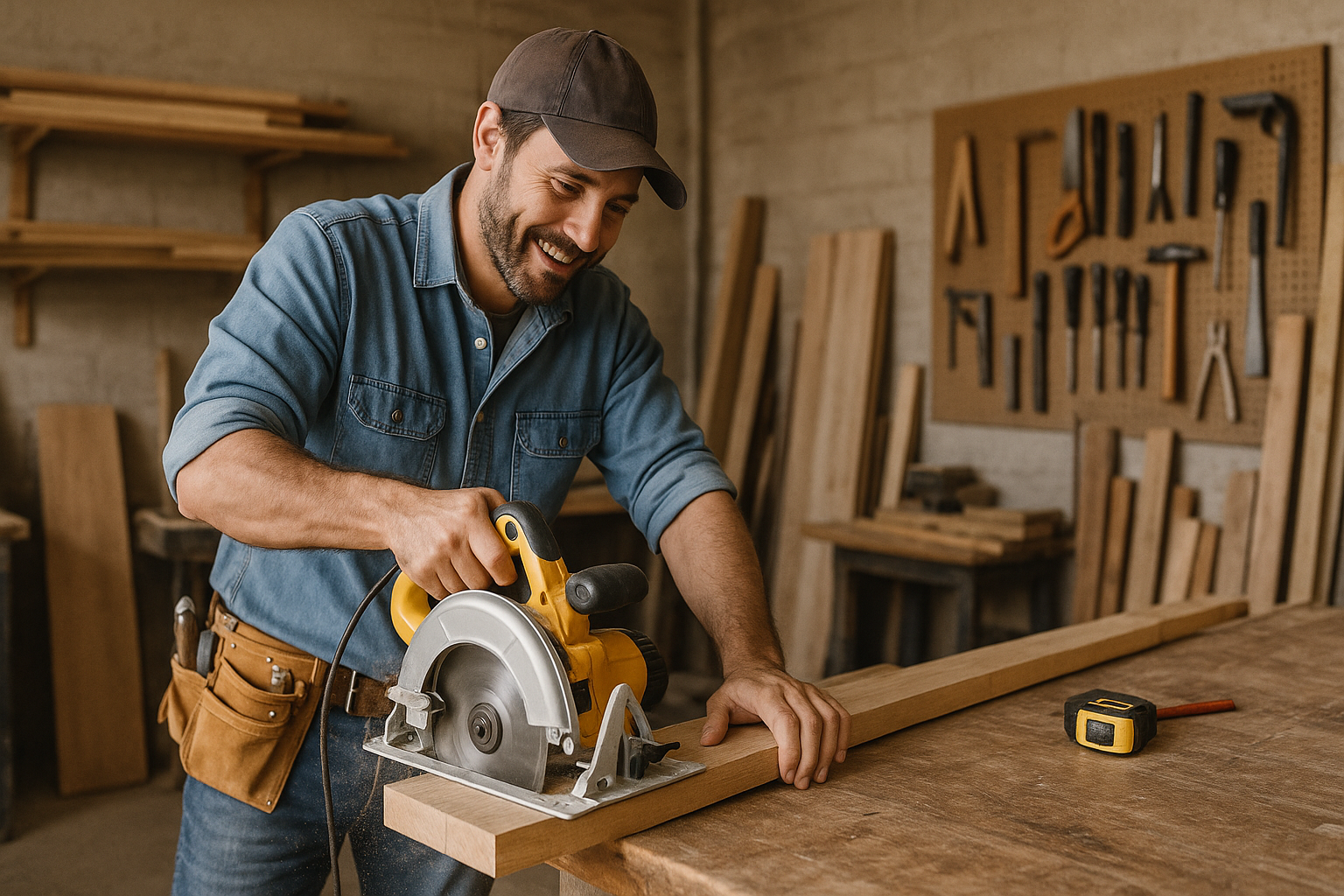
If I am spending twenty minutes fighting a cheap circular saw that keeps binding up in the wood, that is twenty minutes I am not getting paid for. Professional handymen invest heavily in their rigs. We are talking table saws, track saws, random orbital sanders, brad nailers, and a small mountain of clamps. Seriously; you can never have enough clamps.
But the real hidden cost isn’t the equipment; it’s the invisible geometry happening behind the scenes. Before a single blade touches the wood, a good handyman has already calculated the kerf (the width of the saw cut) and accounted for material waste. We measure twice, cut once, and still double-check everything because quality lumber isn’t exactly cheap right now. Have you ever tried to transport sixteen-foot trim boards in a standard truck bed without snapping them in half? It is a logistical nightmare.
That kind of meticulous attention to detail, planning, and care is what homeowners are really paying for when they hire a professional.
Why Homeowners Actually Care About Your Passion
So, why am I telling you all of this? If you are a homeowner sitting on your couch reading this right now, you probably aren’t looking to start your own contracting business. You are likely just searching for a reliable guy to fix that rotting fascia board, repair a wobbly banister, or finally install those floating shelves in the kitchen.
Here is why knowing the business side of woodworking services matters to you. When you hire someone who treats their craft as a true passion turned into a legitimate profession, you get a completely different caliber of work. You aren’t getting a guy who slaps some drywall mud over a rotted stud and calls it a day. You are getting a craftsman who understands structural integrity, cares deeply about the final finish, and genuinely respects your home.
A passionate pro treats your baseboards, doors, and cabinets as if they were installing them in their own house. They show up on time. They clean up their sawdust before they leave. They do the job right the first time because their reputation—and their livelihood—depends entirely on your satisfaction.
Ready to Let the Pros Handle the Heavy Lifting?
Turning a love for woodworking into a full-fledged handyman business takes years of practice, countless calluses, and a whole lot of dedication. But honestly? We wouldn’t trade it for any desk job out there. We absolutely love what we do, and that passion translates directly into the quality of our work.
If your Chandler home needs some attention, don’t leave your carpentry and repair projects to chance. Whether it is hanging new interior doors, repairing weather-beaten fences, or tackling a highly custom woodworking request, we have the tools, the skills, and the drive to get it done perfectly.
Let us bring our craftsmanship straight to your doorstep. Give East Valley Handyman a call today at 480-500-6935 to discuss your next project. Or, if you prefer to handle things online, you can always Request a Free Quote through our website. We are ready to put our passion to work for you.