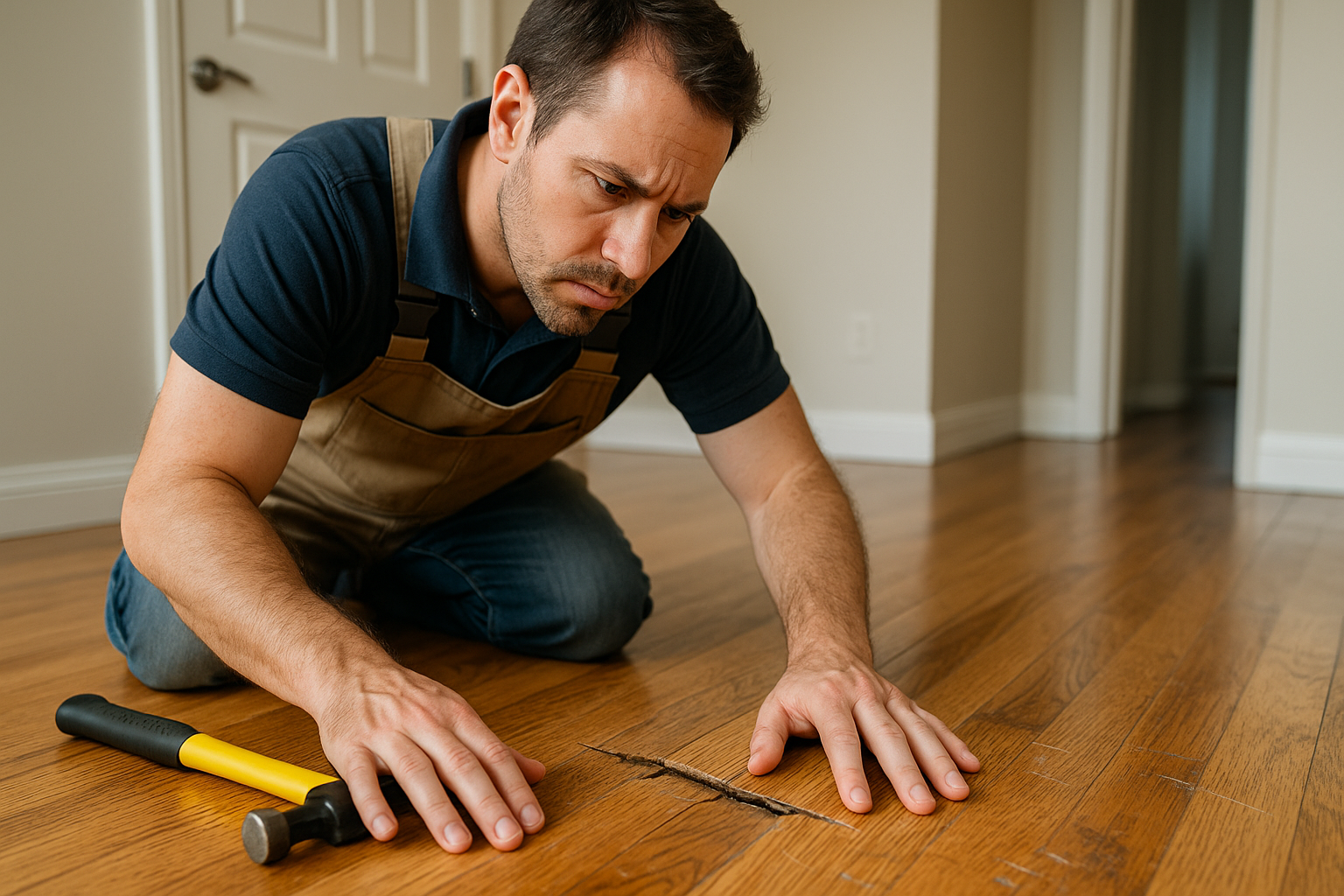
Your home’s floors take an absolute beating day in and day out, especially when you factor in the gritty dust and intense heat we get here in Chandler, AZ. You might not pay much attention to what is right under your feet until a loose floorboard trips you up or a cracked tile catches your eye. Honestly, ignoring those early warning signs usually leads to much bigger headaches down the road.
Wait, Is Your Floor Trying to Tell You Something?
Let me explain how homes usually communicate. They don’t just suddenly break; they give you subtle hints first. You know what? We get so used to the quirks of our own houses that we literally stop noticing them entirely. That squeaky hallway board just becomes a normal part of your midnight trip to the kitchen. You learn to step over the weird, soft spot near the bathroom sink.
But here’s the thing. Those little noises, dips, and blemishes are actual signals. They are your floor’s way of asking for some professional help before a minor fix turns into a massive replacement project.
It is like ignoring a strange noise in your car’s engine. You might think it is just a loose piece of plastic rattling around, but suddenly you are stranded on the side of the Loop 202. Floors operate on the exact same principle. A minor issue with the surface often points to a larger problem brewing underneath. When that happens, bringing in a reliable Floor Repair Handyman is the smartest move you can make.
The Telltale Symptoms You Shouldn’t Ignore
If you are wondering whether your floor just has normal wear and tear or if it actually needs repairs, you are not alone. Let’s look at some of the most common red flags.
- The hollow tile echo: Tap on your tile floor with a coin or the handle of a screwdriver. Does it sound solid, or does it sound weirdly hollow? A hollow sound means the tile has detached from the subfloor beneath it.
- Spongy or soft spots: If you step on a section of your vinyl or hardwood floor and it feels like it sinks slightly under your weight, you have a serious problem.
- Peeling and curling edges: Laminate and luxury vinyl plank floors are durable, but they hate excessive moisture. If the edges are curling upward, water has likely compromised the planks.
- Deep scratches and gouges: We aren’t talking about tiny scuffs from your dog’s nails. Deep gouges expose the raw wood beneath the protective finish, leaving it completely vulnerable to rot.
When Squeaks Turn Into Groans
Let’s talk about the dreaded floor squeak. Most people think a squeaky floor is just a harmless annoyance of an older home. Actually, it’s not. Well, sometimes it is, but usually, it points to loose fasteners.
Over time, as humidity levels fluctuate—especially during our wild Arizona monsoon seasons—wood expands and contracts. This constant movement causes the nails holding your subfloor to the joists to loosen. When you step on that spot, the wood literally just rubs against the nail shaft. That friction creates the squeak.
A professional handyman can fix this by locating the joists and properly securing the subfloor with specialized screws, bypassing the old, failed nails. It seems like a simple fix, but finding the exact joist through carpeting or finished wood without doing more damage requires a bit of know-how.
Tile Troubles: A Chandler Classic
Tile flooring is incredibly popular in Chandler. It keeps the house cool during our brutal summers and generally holds up well against desert dust. But tile is rigid. It has absolutely no give.
So, what happens when your home’s concrete slab foundation naturally settles a tiny bit? The tile takes the brunt of that stress. You might wake up one day and notice a hairline crack running straight across three or four tiles in your kitchen.
You might be tempted to just ignore it. I completely get that. But cracked tiles have incredibly sharp edges that are massive tripping hazards for kids and pets. Plus, once the surface is broken, water from mopping seeps straight down into the thin-set mortar—that’s the technical term for the cement-based glue holding the tile down.
When water breaks down the thin-set, the tile becomes loose. Suddenly, you have “tenting” tiles that pop up out of nowhere. A Chandler floor repair specialist can safely chip out the damaged tiles, grind away the old mortar, and seamlessly drop in replacements without destroying the surrounding floor.
A Quick Guide to Floor Damage
Sometimes it helps to see everything laid out clearly. Here is a quick breakdown of common flooring materials, their warning signs, and what is usually causing the issue.
| Flooring Material | Warning Signal | Likely Culprit |
|---|---|---|
| Ceramic/Porcelain Tile | Hollow sound when tapped | Failing thin-set mortar or shifting slab |
| Hardwood Floors | Edges curling upward (cupping) | Moisture imbalance or hidden leaks |
| Laminate/Vinyl Plank | Planks pulling apart (gaps) | Heavy wear or poor initial installation |
Wood and Laminate: The Water Damage Dilemma
Water is basically public enemy number one when it comes to wood and laminate flooring. We have all dropped an ice cube, accidentally kicked it under the refrigerator, and completely forgotten about it. It happens. But consistent moisture exposure does terrible things to floors.
In the flooring industry, we look for two specific reactions to moisture: cupping and crowning.
Cupping happens when the edges of a wooden floorboard sit higher than the center of the board. It looks like a shallow little cup. This almost always means there is excessive moisture hitting the bottom of the wood, usually from a damp subfloor.
Crowning is the exact opposite. The center of the board swells higher than the edges. This often happens if a cupped floor is sanded flat before it properly dries out, or if excessive water is left sitting on the top surface of the floor.
The DIY Myth vs. Professional Repair
You might read a quick internet tutorial and think you can easily fix a separating laminate floor by just gluing the pieces back together. Sometimes you can get away with that! Actually, scratch that. Most of the time, applying construction adhesive to a “floating” floor completely ruins its ability to expand and contract.
Laminate floors are designed to float over the subfloor. If you anchor one piece down with glue, the rest of the floor will eventually buckle because it has nowhere to move when the temperature changes. This is exactly why bringing in someone who understands the mechanics of subfloor damage and expansion gaps is so critical. They know how to use a floor pull bar and a tapping block to gently coax separated planks back together safely.
Let’s Talk About Your Subfloor (The Hidden Culprit)
Speaking of things you can’t see, let’s look beneath the surface. Your visible flooring—whether it is expensive Brazilian cherry hardwood or budget-friendly vinyl—is only as good as the subfloor underneath it.
Think about building a house. You wouldn’t build a beautiful custom home on top of a swamp, right? The foundation has to be solid. If your subfloor is compromised, your top floor is going to fail. It is just a matter of time.
If you have a two-story home in Chandler, your second floor likely uses plywood or Oriented Strand Board (OSB) for the subfloor. If a bathroom pipe slowly leaks behind the wall, that water travels down and soaks into the OSB. Wood rots. It gets crumbly. Soon, you step out of the shower and feel the floor physically dip beneath you.
Fixing this isn’t just about slapping down some new vinyl. A skilled handyman will use an oscillating multi-tool to cut out the rotted section of the subfloor, sister new wood to the existing floor joists for structural support, and lay down a fresh, perfectly level piece of plywood before ever touching the cosmetic flooring.
Why You Shouldn’t Just Throw a Rug Over It
We have all done the “throw a rug over it” trick. You get a nasty stain on the wood or crack a tile, and instead of dealing with it, you slide an area rug over the evidence. Out of sight, out of mind, right?
Honestly, this is a terrible strategy for a few reasons.
First, there are the tripping hazards. A loose floorboard sticking up just a quarter of an inch is enough to catch a toe and send someone flying.
Second, damaged floors create pathways for pests. Here in the desert, scorpions and ants love finding tiny crevices to hide in. A gap in your baseboards paired with a cracked tile near the back patio door is basically an open invitation for bugs to move in.
Finally, small problems escalate into massive bills. A single loose tile is a quick, inexpensive fix for a handyman. But if you ignore it, the surrounding tiles lose their lateral support. You walk on them, they shift, and suddenly you have twenty broken tiles and need a full room replacement. Catching the signals early saves you money. Period.
Finding the Right Fix for Your Home
Not every flooring issue requires a massive construction crew tearing your house apart for three weeks. Very often, localized damage can be meticulously repaired by someone who knows exactly what they are doing.
If you have a few chipped tiles in the kitchen, a severely scratched section of hardwood near the front door, or annoying gaps appearing in your living room laminate, it is totally fixable. You just need someone with the right tools, the correct materials, and the patience to blend the new repair perfectly with the older surrounding floor.
A professional will come in, assess the actual cause of the damage (like finding the hidden moisture source), and provide a lasting solution. Because nobody wants to fix the same floor twice.
Time to Bring in East Valley Handyman
If your floors are starting to show their age, making weird noises, or literally coming apart at the seams, it is time to stop ignoring the signals. Your home is your biggest investment, and keeping your floors safe, level, and beautiful is a huge part of maintaining its value.
You don’t have to live with the squeaks, the cracks, or the constant fear of tripping over a loose threshold. We are local, we understand how Chandler’s unique climate affects building materials, and we know exactly how to fix it right the very first time.
Ready to get your home back in perfect shape? Contact East Valley Handyman today! You can easily reach us by phone # 480-500-6935 or Request a Free Quote right now to get started. Let’s make your floors solid again.