You flip a switch, and instead of a brightly lit room, you get a sad, momentary flicker followed by total darkness. It is incredibly frustrating, especially when you are just trying to relax after a long day battling the Arizona heat. Honestly, electrical issues are one of those things that make even the bravest DIYer pause, and for good reason.
What Is Up With That Tripping Breaker?
Let me explain. Your electrical panel is basically the central command station of your home’s power system. When a breaker trips, your first instinct is probably annoyance. You march out to the hot garage, open that gray metal door, and firmly flip the switch back. But if it keeps happening day after day, you definitely have a power struggle on your hands.
Usually, this means you are asking a single circuit to do way too much work. Think about a typical July afternoon in Chandler. You have the air conditioner blasting, a box fan running in the corner, and then someone decides to fire up a high-draw appliance like a vacuum cleaner or a hairdryer. Pop. The breaker does exactly what it was designed to do. It shuts down the flow of electricity to prevent the wires inside your walls from melting.
I was talking to a homeowner over near Downtown Chandler recently. They live in a beautiful older home. They could not figure out why their kitchen lost power every single morning at exactly 7 AM. Turns out, the toaster oven, the coffee maker, and the microwave were all sitting on the exact same 15-amp circuit.
Wait, what is a 15-amp circuit? Basically, it is a copper wire rated to carry a specific amount of electrical current safely. Push too much power through it, and the breaker trips.
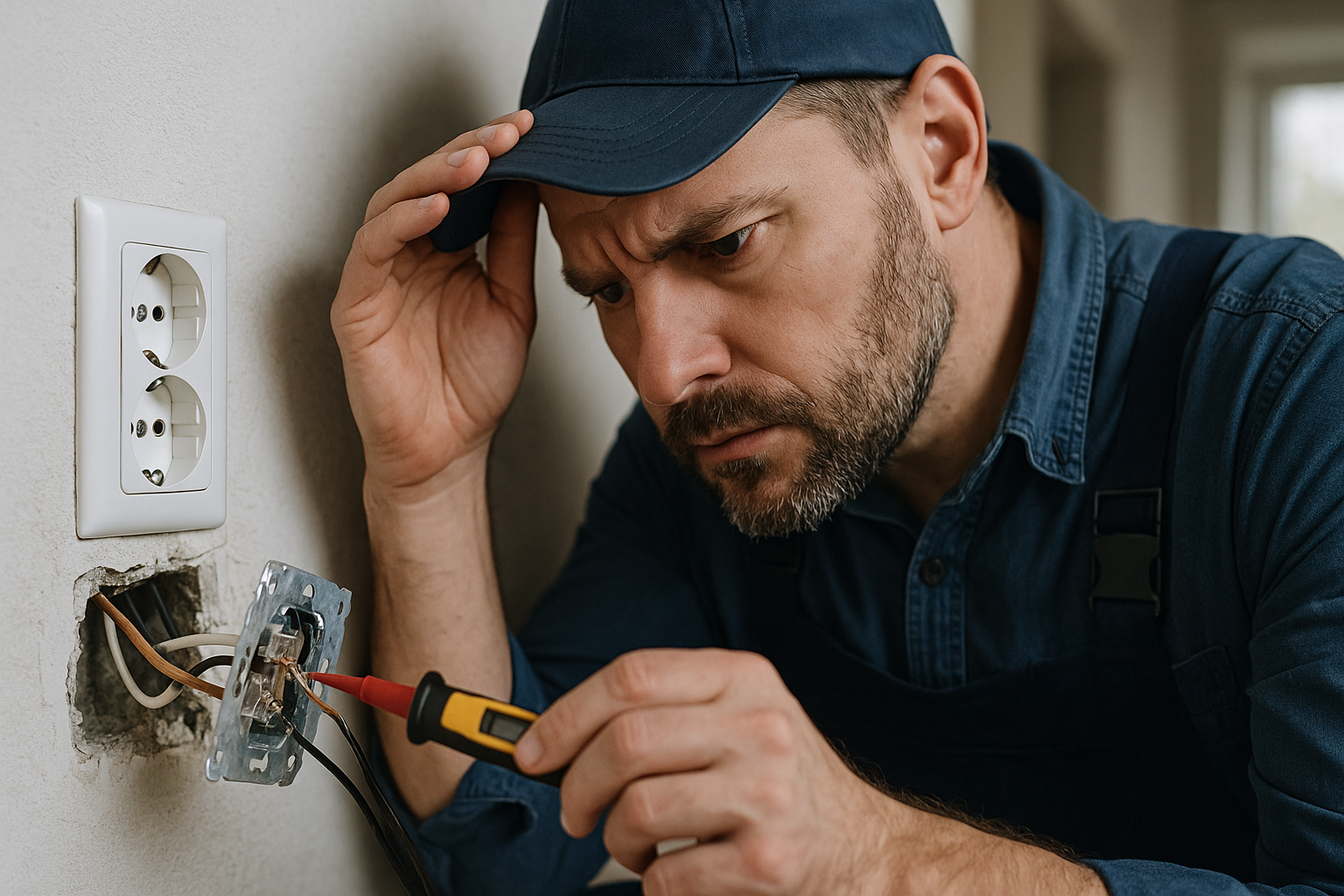
Sometimes, though, you are not dealing with a simple overload. It could be a short circuit. A short circuit happens when a hot wire touches a neutral wire or a ground wire. That is a much bigger deal. A reliable Chandler handyman can trace that fault using a diagnostic tool like a Fluke multimeter. We use these tools to read the voltage and find out exactly what is going wrong behind the drywall, so you do not have to guess.
The Ghost in the Machine: Flickering Lights
You know what? Flickering lights always make a house feel a bit like a haunted mansion. It is distracting, and it is usually a sign that something is not quite right with the connection.
If a single light bulb is just physically loose in the socket, simply tightening it up usually fixes the problem instantly. But if you swap out the bulb for a brand new one and that annoying flicker sticks around, you might have a loose wire connection inside the fixture itself.
Over time, the constant expansion and contraction of metal wires can cause connections to loosen up. We see a lot of thermal expansion here because of our wild desert temperature swings. It happens more often than you would think. A loose connection creates electrical arcing. Arcing is just a technical term for electricity literally jumping across a tiny air gap. Arcing causes intense heat. Heat, as you can probably guess, causes house fires.
Here is a quick look at common lighting issues we see all the time:
| Symptom | Probable Cause | Handyman Action |
|---|---|---|
| Constant flickering | Loose wire or bad switch | Secure connections, replace switch |
| Buzzing dimmer switch | Incompatible LED bulb | Install a proper LED-rated dimmer |
| Intermittent dimming | Large appliance turning on | Check circuit load balance |
Speaking of dimmers, this is a huge pet peeve for a lot of folks. People buy cheap LED bulbs at the local hardware store, throw them in a twenty-year-old light fixture, and wonder why the lights buzz like an angry hornet. Here is the thing. Older dimmer switches were built for incandescent bulbs. You usually need to upgrade to a modern Leviton or Lutron switch specifically rated for LEDs. It makes a massive difference in how smooth and quiet your lights operate.
Dead Outlets and Suspiciously Warm Switches
We have all been there. You plug in your phone charger, walk away for an hour, and come back to a completely dead battery. The outlet is just lifeless.
Sometimes an outlet is dead because of a tripped GFCI. Those are the outlets with the little “Test” and “Reset” buttons on the front. You will usually find them in kitchens, bathrooms, laundry rooms, and garages. They protect you from shocks around water. If one trips, it can actually knock out power to several other standard outlets downstream on that exact same circuit. You would think the problem is the outlet in your guest bedroom, but the tripped GFCI is actually hidden behind a pile of boxes out in the garage. I always tell folks to check their GFCI outlets first before assuming the worst.
If resetting a GFCI does not fix it, you might be dealing with a burnt-out receptacle. Outlets do not last forever. They really do not. The internal metal contacts wear out after years of plugging and unplugging cords. When you plug something in and it feels loose or droopy, that is a big red flag. A professional handyman service can safely swap out that old, tired outlet for a fresh, tight, commercial-grade receptacle. We usually carry a tool pouch full of reliable Klein Tools specifically for this kind of quick, precise electrical work.
Watch out for warmth. This is crucial. If you ever touch a light switch or an outlet cover plate and it feels warm to the touch, go to your panel and turn off that breaker immediately. Warmth means electrical resistance. Resistance means the wires are struggling, and that is a serious fire hazard.
Quirks of Maintaining Power in the Desert
Let’s talk about where we live for a second. Living in the East Valley comes with its own set of unique challenges that homeowners in other states just do not have to worry about.
First, the dust. Dust gets into absolutely everything here. Over years and years, fine desert dust can settle deeply inside exterior outlets and even inside your main breaker panel. This dust can mess with the metal electrical contacts and cause intermittent power failures.
Then, we have our famous monsoon season. You know exactly how it gets in late July. The sky turns dark brown, the wind howls, the rain dumps, and the local power grid takes an absolute beating. Those sudden power bumps, microbursts, and heavy surges are really hard on your home’s electrical system. A quick power surge can easily fry a delicate dimmer switch or blow out the low-voltage transformer connected to your doorbell.
Now, you might naturally assume every power outage after a storm is an issue with your own house. But actually, a lot of the time it is just the utility company dealing with a blown transformer down the street. However, if your neighbor’s lights are on and your lights are off? That is when you need to start looking at your own panel.
Common post-storm electrical checks:
- Reset your GFCIs: Surges trip these sensitive safety devices very frequently.
- Check your exterior outlets: Strong winds easily push moisture into outdoor covers that are not properly sealed.
- Test your breakers: Sometimes a breaker trips but the plastic switch does not fully move to the “Off” position. You have to push it firmly all the way to “Off” before switching it back to “On.”
The Handyman vs. The Heavy-Duty Contractor
Why hire a handyman instead of a huge commercial electrical company? Well, a major contractor is great for wiring a brand-new custom house from the ground up. They bring big crews for big jobs.
But if you just need a few faulty outlets swapped out, a new ceiling fan installed, or a flickering light diagnosed, calling a large electrical firm can be serious overkill. They often have massive minimum service fees just to park their truck in your driveway. A local handyman is usually much more responsive, deeply personal, and highly cost-effective for these everyday power struggles.
Look, there are plenty of home improvement projects you can tackle yourself with a quick internet video and a free Saturday afternoon. Painting a guest bedroom? Go for it. Fixing a squeaky cabinet hinge? Very easy. But when it comes to electrical repairs in Chandler, the stakes are simply too high to guess. Electricity is completely invisible, and it is entirely unforgiving.
You might be tempted to rewire that heavy ceiling fan yourself. I get the appeal of saving a few bucks. I really do. But a professional handyman brings years of experience, the exact right safety tools, and a firm understanding of proper wiring techniques. We know how to strip a wire cover without nicking the fragile copper underneath. We know exactly how much torque to apply to a wire nut so it stays completely secure for decades. It is that kind of peace of mind that you are really paying for.
Plus, a good handyman can spot related issues while they are already working in your home. We might be there to fix a broken bathroom light, but we happen to notice your exhaust fan vent is heavily clogged with lint. We can fix both problems in one trip. That kind of comprehensive care keeps your whole home running smoothly and safely.
Let’s Get Your Power Back on Track
You do not have to live with flickering lights, mysteriously dead outlets, or breakers that trip every single time you try to heat up leftovers in the microwave. Your home is supposed to be your comfortable sanctuary, not a source of constant frustration and worry.
If you are dealing with power struggles in your house, let us take the stress right off your plate. East Valley Handyman is right here in Chandler, AZ, ready to help you sort out those tricky electrical gremlins safely and efficiently. We treat your home with the exact same care and respect we treat our own.
Stop wandering around in the dark trying to guess what is wrong. Give us a call directly at 480-500-6935 to talk about what is going on with your power. Or, if you prefer typing over talking, you can easily Request a Free Quote through our website. Let’s get your home fully powered, safe, and back to normal today.