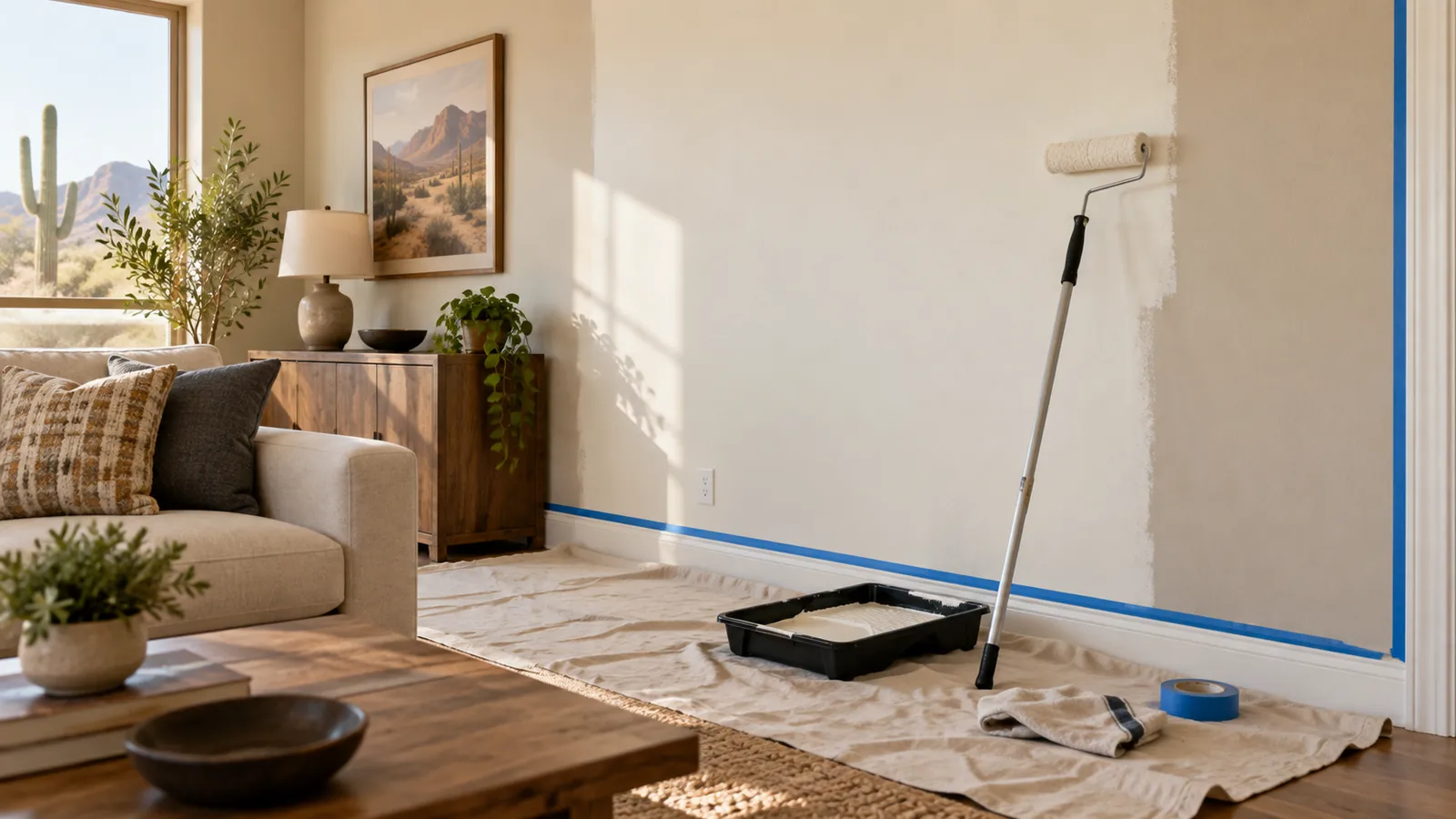
Let’s be honest for a second, living in Chandler, Arizona, means your home’s exterior takes an absolute beating from the intense desert sun. If your house is starting to look a little tired, faded, or chalky, you are definitely not alone in this struggle. The good news is that a fresh coat of paint and some strategic handyman touch-ups can completely turn things around.
Why Your Home’s Exterior Is Begging for Attention (And Why You Keep Ignoring It)
But here is the thing. Your neighbors notice. People walking their dogs notice. And if you are thinking about selling anytime soon, potential buyers definitely notice.
It causes vibrant colors to lose their punch and turn dusty. It is so easy to put off painting because it sounds like a massive, expensive hassle. You might think it is just a cosmetic issue, so why rush?
Actually, letting it go too long is what really costs you money. When exterior paint fails, it stops protecting your house. That is exactly when a basic aesthetic issue turns into a massive structural repair bill. Getting ahead of the weather is the smartest move a homeowner can make.
The Paint Makes or Breaks the Look. Seriously.
You cannot just grab a trendy, moody dark gray off the shelf at the hardware store and slap it on your exterior walls. Well, you could, but your summer utility bill would absolutely skyrocket.
Simply put, LRV measures how much light a paint color reflects on a scale from zero to one hundred. A true black is zero; it absorbs all the heat and light. A pure white is one hundred. Here in Chandler, you want exterior painting colors with a higher LRV. A higher number bounces the sun right off your house, keeping the exterior walls physically cooler.
Living in the East Valley usually means playing by the homeowner association rules. They love their earth tones, don’t they? Beiges, tans, soft browns, and muted terracottas dominate the neighborhoods. You might feel totally limited by these strict palettes, but a skilled Chandler handyman knows how to work within those boundaries to make your property pop.
You just have to get creative with the subtle contrasts. A slightly darker fascia board or a crisp, lighter pop-out around the windows adds instant architectural interest without angering the HOA board.
Prep Work: The Boring Stuff That Actually Matters
Painting is about eighty percent preparation and twenty percent actually putting color on the wall. It is the fun part. But if you skip the prep work, that expensive bucket of exterior paint will peel off in sheets by next July.
It is tedious. It is messy. It is totally non-negotiable.
Think about it like trying to stick a piece of tape to a dusty dashboard. It just won’t hold. Your house is covered in a fine layer of desert dust, and paint needs a clean, solid surface to grip.
| Prep Step | Why Professionals Do It | Skipping It Means… |
|---|---|---|
| Power Washing | Removes chalky residue, dirt, and spider webs. | New paint sticks to dirt, causing rapid peeling. |
| Caulking & Patching | Seals gaps against water and native pests. | Stucco damage and hidden moisture rot inside walls. |
| Masking & Taping | Protects windows, brick accents, and concrete. | Sloppy lines and permanent stains on the driveway. |
See? The prep is the absolute foundation of the project. If the foundation is weak, the whole job crumbles.
Little Things That Pack a Huge Punch
Actually, no. Sometimes a full repaint is completely overkill. You do not always need scaffolding and a massive crew to make a difference.
Think about your front door. It is the natural focal point of your house. Every guest looks right at it. Painting a weathered front door a bold, welcoming color, maybe a rich navy blue or a deep rustic red, changes the entire vibe of the entryway.
Then there is the trim. Faded fascia boards make a house look exhausted. Slapping a fresh coat of high-quality, semi-gloss paint on the trim, the pop-outs, and the garage doors brings back that crisp, newly-built contrast. It is amazing what just a few gallons of paint can do when applied to the right spots.
- Update the garage door: This takes up massive visual real estate on most homes. Paint it to match the body of the house to make the home look wider, or match the trim for a framed, deliberate look.
- Refresh the side gates: Wood slats get absolutely beaten up by the dry heat. Restaining or repainting them makes the side yard look cared for rather than neglected.
- Tackle the patio ceiling: Painting the ceiling of your covered entryway a light, airy color, like a soft haint blue or bright white, draws the eye up and makes the whole space feel taller and far more welcoming.
Don’t Forget the Stucco Repairs
Here is a quick tangent that really matters. Almost all Chandler homes are finished with stucco, and stucco cracks. It is just a simple fact of life when houses settle in the dry desert soil.
Before you even think about rolling a fresh color over a crack, it has to be patched properly.
As your house heats up during a summer afternoon and cools down overnight, the walls literally expand and contract. Standard, cheap acrylic paint will just snap and crack right along with the moving stucco. Elastomeric materials flex like a heavy-duty rubber band. It is a bit of a professional trade secret, but using the correct flexible materials saves you from redoing the exact same repair job two years from now.
Review the scope before hiring
But honestly? Paint alone will not fix terrible curb appeal.
If you paint your house beautifully, but your front yard looks like a barren wasteland and your porch light is hanging by a wire, the gorgeous paint job gets completely lost.
Curb appeal is a package deal.
Once the local Handyman Services wrap up the painting, you need to look at the accessories. Swap out those rusted, builder-grade house numbers for something sharp and modern. Maybe brushed nickel or matte black to contrast the new paint. Change out the flickering porch light fixture for something that actually illuminates the entryway. Throw down some fresh decorative gravel or plant a couple of drought-tolerant agave plants near the front walkway.
When you combine a crisp, clean paint job with tidy landscaping and updated hardware, your house suddenly looks like the absolute best one on the block. The paint highlights the home; the small details complete the picture.
Finding the Right Hands for the Job
Painting your own home sounds like a fun, satisfying weekend project, until you are balancing on a shaky ladder in 105-degree heat, trying desperately to edge perfectly around a second-story window.
You know what? It is exhausting. It is frustrating. And it is actually pretty dangerous if you aren’t used to working at heights. You end up making five trips to the hardware store because you bought the wrong nap roller, and your weekend suddenly vanishes.
You want someone who truly understands the local climate, knows exactly how to navigate those pesky HOA color requirements, and already has the professional-grade tools to get the job done right.
A great handyman does not just slap wet paint on a wall and leave. They look for the hidden wood rot on your fascia boards. They spot the minor water damage near the roofline. They fix the underlying structural problems so your home stays genuinely protected from the elements. They treat your house like it is their own.
Ready to Make Your Neighbors Jealous?
Your home is probably your biggest financial investment, not to mention the place where you build your life. Taking care of the outside is just as important as upgrading the kitchen or bathrooms on the inside.
You do not have to spend your precious days off covered in sticky paint splatters and choking on sanding dust.
If you are tired of pulling into the driveway and looking at a faded, sun-damaged house, let’s fix it together.
Let’s give your home the incredible curb appeal it truly deserves!
Discuss a suitable repair
East Valley Handyman handles practical repair, mounting, assembly, patching and finish projects in Chandler and the East Valley. Send the project details so the scope can be reviewed before scheduling. Major trade work, structural repairs and permit-dependent projects need the appropriate licensed specialist.
Need a hand with a project?
Tell us what needs attention, where the work is and what you have in mind. We serve Chandler and the surrounding East Valley.
Request a free quote →