
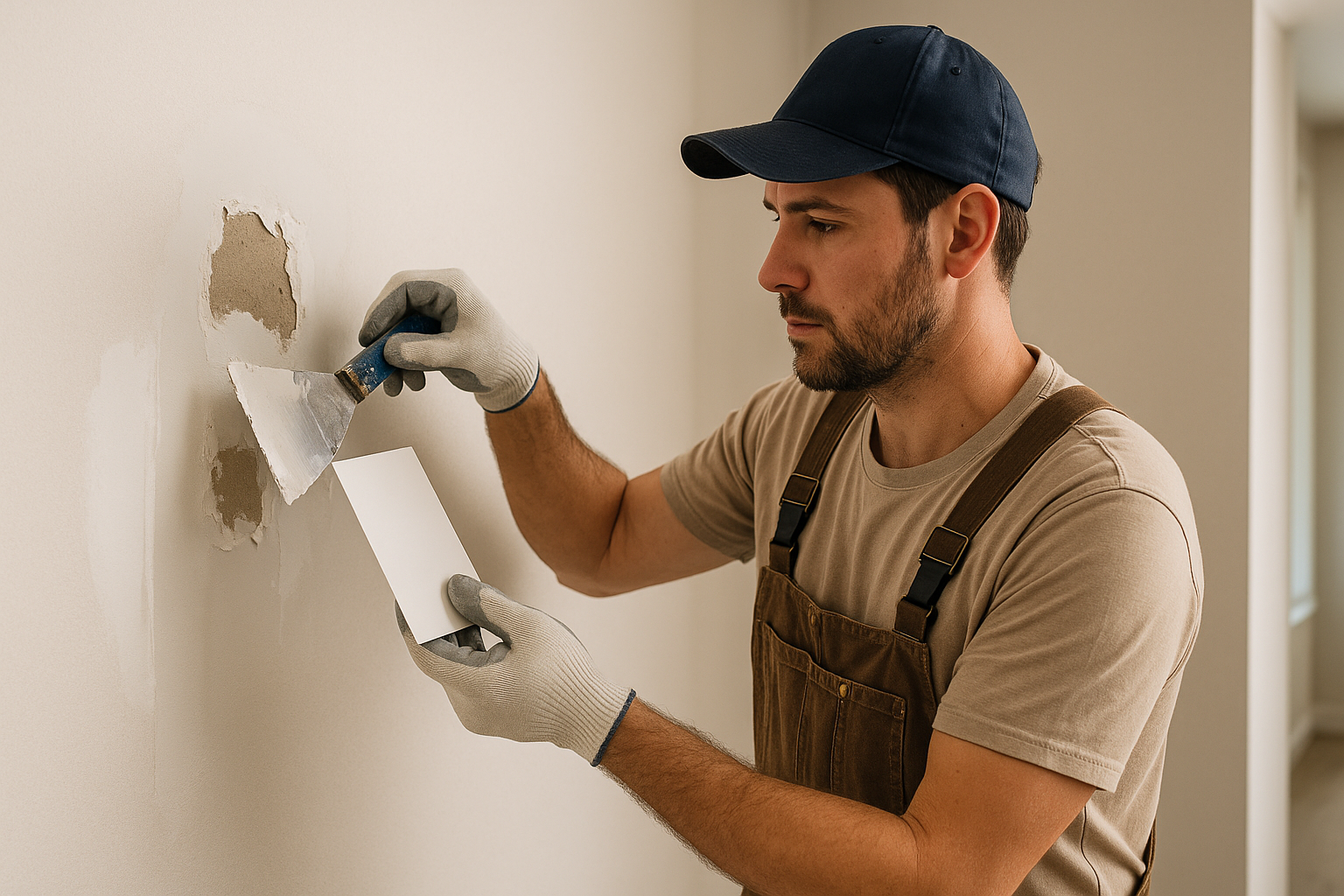
You walk past it every single day—that glaring, jagged hole in the hallway where a doorknob decided to pick a fight with the wall. It is incredibly annoying, isn’t it? Honestly, patching drywall sounds simple enough until you are staring at a patchy, lumpy mess that actually looks worse than the original dent.
Why Chandler Walls Take a Beating
Let’s talk about why our walls take such a beating out here in Chandler. Between the extreme summer heat baking our houses and the sudden monsoon humidity, building materials constantly expand and contract. This non-stop shifting naturally creates hairline cracks around windows, archways, and doorframes. Our local soil has a lot of clay in it, too. When it rains, the ground swells; when it dries out, it shrinks. Your foundation subtly moves with it, and your rigid walls simply crack under the pressure.
Add kids, pets, or moving-day mishaps into the mix, and you’ve got a perfect recipe for damaged sheetrock. You know what I mean? One minute you are wrestling a heavy new couch through the front door, and the next, crack. You have a massive gouge right in the middle of your otherwise pristine living room wall.
It is always tempting to just slap some generic spackle on it, sand it down roughly, and call it a day. But here’s the thing. Not all wall damage is created equal. A tiny nail hole left behind from a picture frame takes just two minutes to fix. A baseball-sized hole from a stray toy? That requires a completely different approach. And let me tell you, moisture damage from a leaky AC unit running overtime in July is an entirely different beast altogether.
Let me explain how a professional Chandler handyman actually handles these common headaches, ensuring the repair blends flawlessly into your home.
The Pro’s Toolkit: More Than Just Paste
If you wander down the paint aisle at the local hardware store, you will inevitably see dozens of little plastic tubs promising a fast, permanent fix. But a real drywall repair job—the kind that makes the damage completely disappear—relies on specific tools and professional-grade materials. We aren’t just filling a void; we are actively rebuilding a solid, durable surface.
- The right mud matters immensely. We typically rely on a setting-type joint compound for deep repairs, like USG Easy Sand, because it cures hard through a chemical reaction rather than just air drying. Regular lightweight spackle just shrinks and cracks when you try to fill anything larger than a dime.
- Tape is your best friend. Fibreglass mesh tape or traditional paper tape physically bridges the gap over a hole or seam. Without quality tape, that exact same crack is going to show right back up the next time the temperature unexpectedly drops.
- Quality knives make the difference. Spreading mud with a cheap, rigid plastic putty knife leaves awful ridges everywhere. A good flexible steel blade, maybe a six-inch Purdy or Hyde knife, lets us feather out the edges smoothly.
Feathering is just a trade term for spreading the joint compound incredibly thin at the outer edges of the repair. You want the new mud to blend so seamlessly into the old wall that you absolutely cannot feel the transition when you run your hand over it. Spreading mud is a lot like frosting a cake, honestly. If the cake is lumpy, the frosting looks terrible.
If you run your hand across a finished patch and feel a noticeable bump, it is going to cast a long, ugly shadow under your living room lamps at night. Nobody wants that. We take the time to build the repair up in thin, manageable layers.
The Texture Trap: Orange Peel and Knockdown Headaches
Here is exactly where most DIY drywall repairs go horribly wrong. You spend hours getting the wall perfectly flat. It feels as smooth as glass. Then you paint it, step back to admire your work, and suddenly realize your wall has texture everywhere except the exact spot you just fixed. It stands out like a sore thumb, right?
Chandler homes built over the last few decades are notorious for specific wall finishes. Most modern houses around the East Valley feature a medium knockdown texture or a subtle orange peel finish. Matching this existing texture is honestly much more of an art than a science.
You can buy those aerosol texture spray cans at the store, but they are incredibly finicky. If the can is a little too cold, it spits out big chunky blobs. If you spray too close to the wall, it puddles and runs. We approach texturing by carefully mimicking the original application method. Sometimes that means using a pneumatic hopper gun for large areas; other times, it involves a simple natural sea sponge and a very light hand.
The secret is adjusting the pressure, the nozzle size, and the thickness of the mud to match the exact splatter pattern of your existing wall. It takes practice. Actually, it takes a lot of practice to get it right.
And you cannot forget the primer. Once the new texture is completely dry, you absolutely must apply a good primer before painting. Drywall mud is highly porous. If you just roll standard interior paint directly over a raw patch, the mud sucks the moisture right out of the paint. This leaves a dull spot on your wall known as “flashing.” We always seal the patch correctly so the final coat of paint shines perfectly even.
Sizing Up the Damage: From Dents to Disasters
So, how do we decide which specific method to use? It all comes down to the size, depth, and underlying cause of the damage. Professional handymen mentally categorize repairs the moment they look at a wall to figure out exactly what materials to pull from the truck.
| Damage Type | Typical Cause | The Handyman’s Fix |
|---|---|---|
| Small Punctures | Nails, screws, thumbtacks | High-quality vinyl spackle and a quick, light sanding. |
| Medium Holes | Doorknobs, stray toys | Mesh tape, multiple thin coats of joint compound, and expert feathering. |
| Large Gouges | Moving furniture, Plumbing repairs | A “California patch” or backing wood combined with a fresh drywall scrap. |
When dealing with those intimidating large holes, a “California patch” is an old trade trick that works wonders. We cut a piece of fresh drywall slightly larger than the actual hole. Then, we strip back the brittle gypsum core around the edges, leaving just the strong paper face intact. We use that overlapping paper as built-in tape. It creates a surprisingly strong, incredibly flush repair that requires way less mud than a standard patch.
But wait, what if the drywall is soft, stained, or crumbly to the touch? That usually points directly to hidden water damage. Maybe an old roof leak from last year’s monsoon season finally soaked completely through the ceiling. In that severe case, no amount of fresh mud will save it. You have to decisively cut out the rotten material entirely, fix the actual source of the moisture, and hang brand-new sheetrock.
Speaking of hanging new sheetrock, location matters too. If the hole is out in your garage on the wall shared with your living room, we cannot just use standard half-inch drywall. Fire safety codes require 5/8-inch Type X fire-rated drywall for that specific boundary. Knowing these minor, easily overlooked details is what separates a proper repair from a temporary bandage.
Why Skip the DIY Frustration?
I totally get the appeal of trying to fix it yourself. There are hundreds of fast-paced video tutorials out there making fixing drywall holes look like an absolute breeze. The guy on the screen confidently swipes his knife once, and boom—a perfectly flat wall.
But let’s be real for a second. That guy has been holding a drywall knife every single day for twenty years. When a homeowner attempts it, they usually end up applying three or four heavy coats of mud. Then, they have to sand it aggressively until the entire house is covered in a fine layer of white powder. And somehow, the patch still looks undeniably lumpy.
That miserable drywall dust gets sucked right into your AC vents. It settles on your dark kitchen counters, coats your electronics, and honestly drives you crazy for weeks. Even worse, if you try to vacuum it up with your standard household vacuum, the ultra-fine dust can easily blow out the motor.
Hiring a reliable professional saves you the mess, the multiple trips to the hardware store, and the lingering stress. We know exactly how much mud to apply right from the start to minimize sanding later. We bring heavy-duty drop cloths, use specialized vacuums designed specifically for fine particulate dust, and proudly leave the area far cleaner than we found it.
Plus, we bring all the specialized tools with us. You don’t have to spend $80 on a hopper gun, heavy tubs of joint compound, and various steel knives for a single, stubborn hole in the hallway. You get to reclaim your hard-earned weekend, and your walls look totally immaculate. Isn’t your free time worth significantly more than fighting with a drying tub of drywall mud on a Saturday afternoon? We definitely think so.
Let’s Get Your Home Back to Normal
Living with obvious wall damage is just a constant, annoying reminder of an unfinished chore hanging over your head. But you do not have to look at it anymore. Whether you are dealing with a handful of ugly nail holes from redecorating the guest room, a mysterious stress crack winding above your master bedroom doorframe, or a glaring hole left over from a recent electrical repair, we are here to help.
East Valley Handyman takes immense pride in delivering seamless, invisible drywall repairs for homeowners all across Chandler, AZ. We evaluate the damage accurately, match your specific wall texture flawlessly, prep the area right, and leave your home looking exactly the way it should. We treat your house with the exact same respect we treat our own.
Stop letting that damaged wall drive you crazy every time you walk past it. Give us a call directly at 480-500-6935 to chat with us about what you need fixed. Or, if it is easier for your schedule, you can quickly Request a Free Quote right now to get things started. Let’s get those walls looking brand new again!

