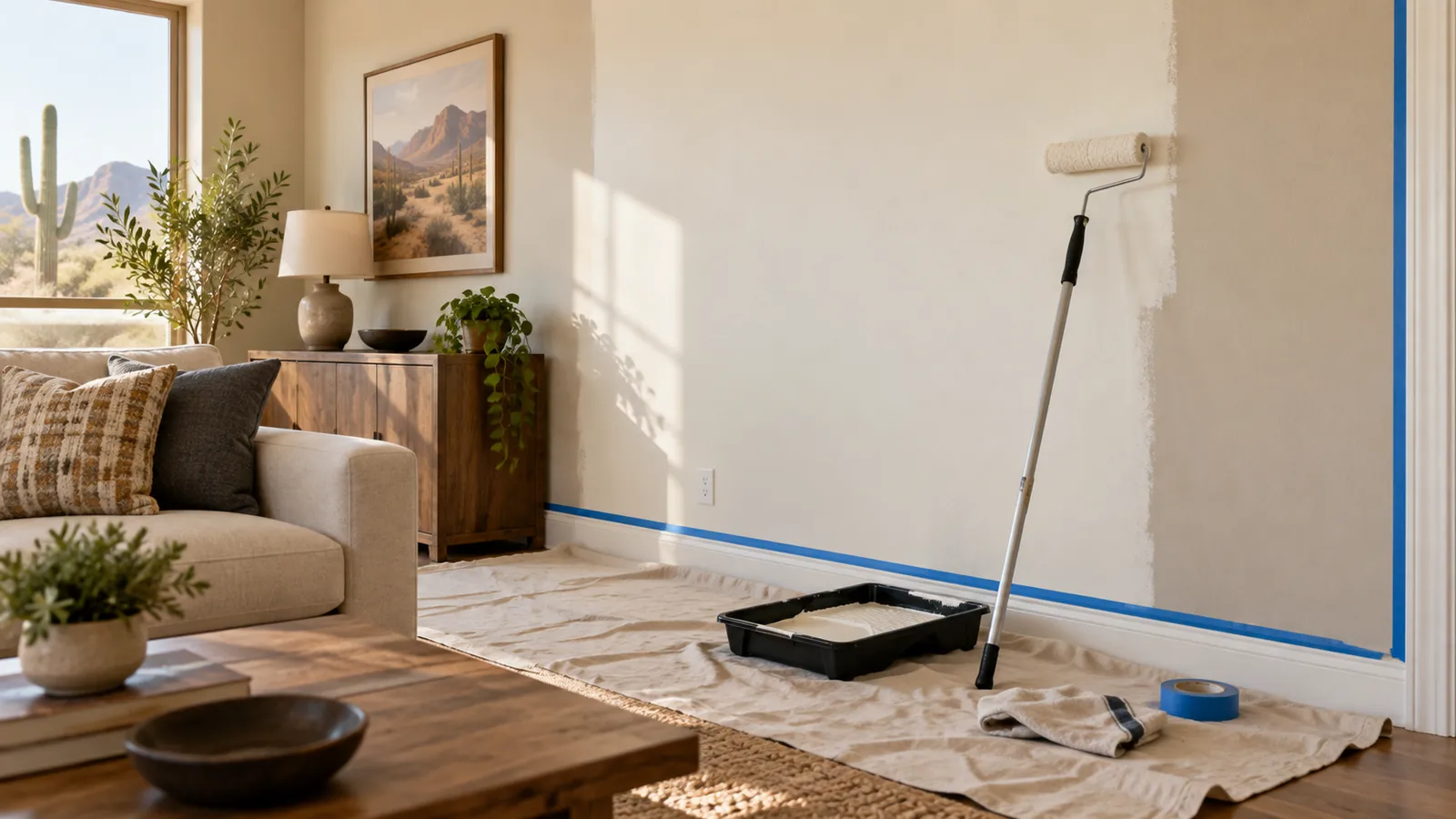
Painting your home is one of the most cost-effective ways to refresh its look and add a personal touch to your living spaces. Whether you’re tackling a single room or the entire house, painting can be a rewarding DIY project. Let’s get started!
1. Choose the Right Paint
Expert Tip: “Selecting the right type of paint for your project is essential. Consider factors like the room’s function, surface type, and desired finish (e.g., matte, satin, or glossy).”
Different paint types are suitable for various surfaces and environments. For example, use semi-gloss or high-gloss paint for high-traffic areas like kitchens and bathrooms, as they are easier to clean. Flat or matte paint is great for hiding imperfections on walls.
2. Prepare Your Space
Expert Tip: “Before you start painting, clear the room of furniture and cover floors and fixtures with drop cloths or plastic sheets to protect them from paint splatter.”
Preparing your space is essential to prevent accidental spills and splatters. Remove all obstacles, cover surfaces, and use painter’s tape to protect edges and trims.
3. Clean and Repair
Expert Tip: “Clean walls and surfaces thoroughly to remove dirt, dust, and grease. Repair any cracks, holes, or imperfections with spackling compound, and sand them smooth.”
A clean and smooth surface ensures that your paint adheres properly and results in a flawless finish. Sanding is especially important for achieving a professional look.
4. Prime When Necessary
Expert Tip: “Priming is essential for new drywall, dark-colored walls, or when switching between oil-based and water-based paints. It provides a consistent base and helps paint adhere better.”
Primer creates an even canvas for your paint and can save you money by reducing the number of paint coats needed.
5. Cut In First
Expert Tip: “Start by ‘cutting in’ the edges of the room with a brush or angled paintbrush before using a roller. This technique ensures clean lines along corners and edges.”
Cutting in is a crucial step in achieving professional-looking results. Take your time to create precise edges before using a roller for larger areas.
6. Use the W Technique
Expert Tip: “When rolling paint on walls, use the ‘W’ technique. Start by painting a large ‘W’ on the wall and then fill it in without lifting the roller. This method ensures even coverage and minimizes streaks.”
Rolling paint in a ‘W’ pattern distributes the paint evenly and avoids leaving lines or streaks.
7. Clean Brushes and Rollers Properly
Expert Tip: “After each use, clean brushes and rollers thoroughly with the appropriate solvent. Store them properly to maintain their condition for future projects.”
Properly cleaning and storing your painting tools extends their lifespan and ensures they perform well in future projects.
8. Inspect and Touch Up
Expert Tip: “Once the paint has dried, inspect your work in different lighting conditions to identify any imperfections or missed spots. Touch up as needed.”
Taking the time to review your work and touch up any inconsistencies or missed areas ensures a professional finish.
Conclusion: Transform Your Space with Professional Painting
With the right tools, techniques, and a little patience, you can achieve professional-level results in your painting projects. Whether you’re refreshing a room or giving your entire home a makeover, these painting tips will help you transform your space and create a fresh, inviting atmosphere.
Ready to start your painting project? Let’s enhance the beauty of your home with a professional paint finish!
Discuss a suitable repair
East Valley Handyman handles practical repair, mounting, assembly, patching and finish projects in Chandler and the East Valley. Send the project details so the scope can be reviewed before scheduling. Major trade work, structural repairs and permit-dependent projects need the appropriate licensed specialist.
Need a hand with a project?
Tell us what needs attention, where the work is and what you have in mind. We serve Chandler and the surrounding East Valley.
Request a free quote →