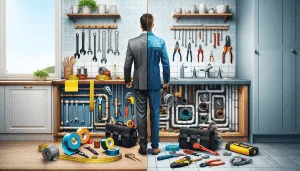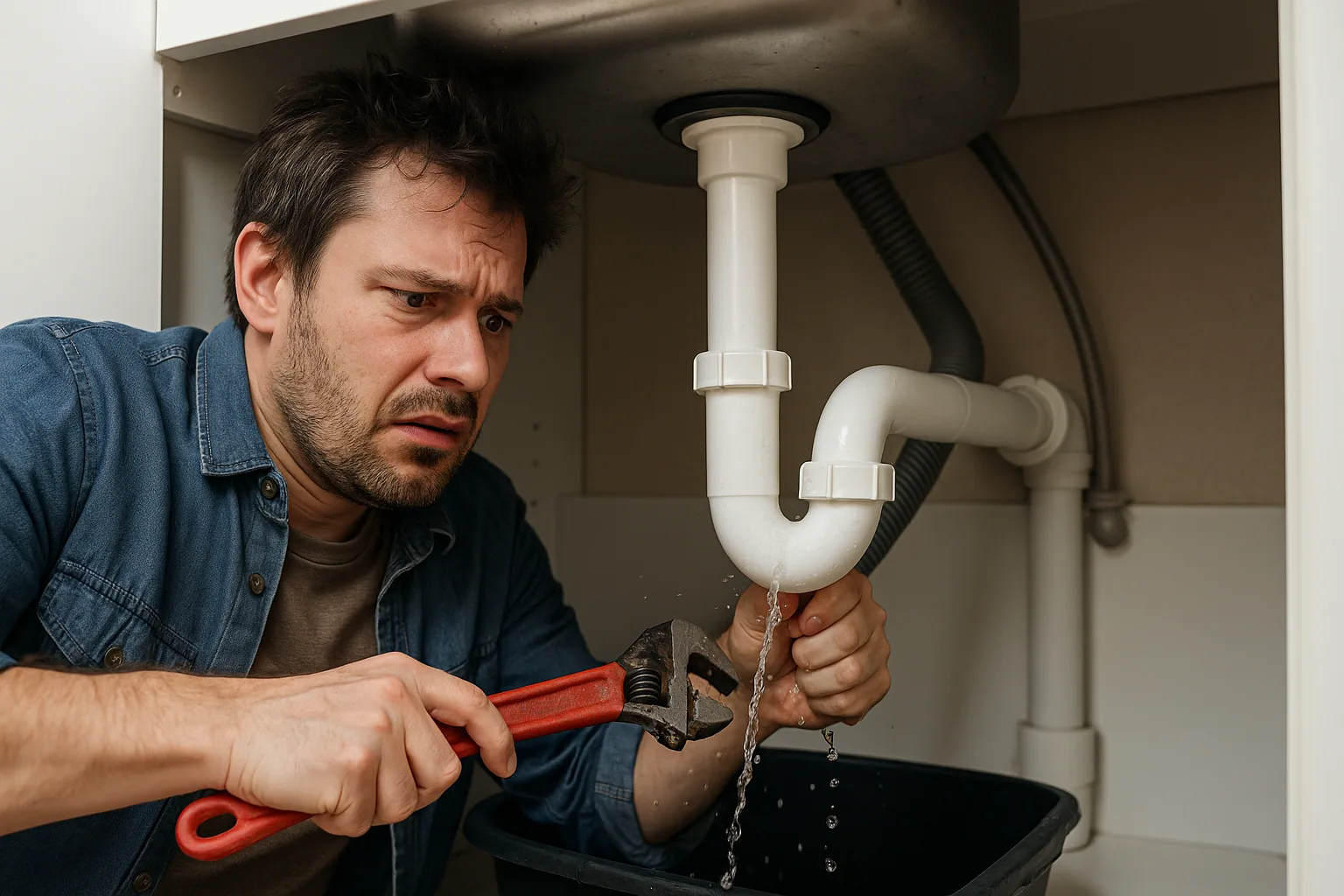
Let me set the scene: it’s Saturday morning, you just found a suspicious puddle under your kitchen sink, and you think a quick trip to the hardware store will fix it. Honestly, a lot of homeowners in Chandler try to tackle Plumbing issues themselves, only to realize that water is surprisingly stubborn—and highly destructive. Before you grab a wrench and hope for the best, let’s talk about the typical missteps that turn a minor drip into a major household headache.
“I Can Fix That” — The Trap of Internet Tutorials
You know what? Online videos make everything look incredibly simple. A professional plumber edits a tricky repair down to a snappy three-minute clip, making you feel entirely invincible. It makes sense why you want to do it yourself. When the Chandler summer heat pushes past 110 degrees, staying inside the air-conditioned house to fix a sink sounds infinitely better than pulling weeds out in the yard.
But plumbing is rarely as straightforward as the videos suggest. Behind those perfectly edited tutorials are years of muscle memory, an innate understanding of water pressure, and a truck full of specialized tools.
When you start tearing into the pipes beneath your bathroom vanity, you often uncover secondary issues. Maybe the shutoff valve is completely seized shut. Maybe the trap is glued instead of threaded. When homeowners underestimate the job, they usually end up making a mid-project panic call for professional plumbing repairs. A seemingly cheap DIY project suddenly becomes an expensive emergency. Let’s look closely at exactly where things usually go off the rails.
The Gorilla Grip: Tightening Things Until They Break
There is a very common misconception that if a pipe is leaking, it just needs to be tightened more. It sounds logical, right? If water is escaping, you just need to close the gap.
Here’s the thing—tight isn’t always right. In fact, over-tightening is easily the most common mistake we see when handling residential plumbing repairs in Chandler.
When you use a pair of massive Channellock pliers to crank down on a plastic slip-joint nut or a toilet supply line, you are doing hidden damage. Plumbing connections rely on rubber seals, gaskets, or O-rings to keep the water inside the pipe.
- You crush the gasket: If you twist too hard, you compress that rubber ring until it literally cracks or twists out of place.
- You crack the plastic: PVC and ABS pipes will simply split under too much pressure.
- You strip the threads: Once metal or plastic threads are stripped, that entire fixture usually needs to be replaced.
A good rule of thumb for under-sink plumbing is to hand-tighten the connections, and then maybe give them an extra quarter-turn with pliers. You want a snug seal, but you do not want to wrestle the pipe into submission. If it still leaks after a gentle tightening, the problem is a bad seal, not a lack of brute force.
The Great Teflon Tape Mystery
Thread seal tape (commonly called Teflon tape) is a wonderful invention. It helps lubricate metal threads so they screw together smoothly, and it fills tiny microscopic gaps to prevent leaks. However, it seems like nobody ever tells homeowners how to actually use it.
People tend to wrap it randomly, thickly, and usually backward.
Let me explain. You actually want to wrap the tape in the exact same direction that the pipe will turn when you screw it in. For almost all plumbing fittings, that means wrapping clockwise. If you wrap it counterclockwise, the tape will simply unravel and bunch up as you screw the fitting into place. You end up with a messy, frayed wad of white tape and a joint that will absolutely leak.
Another minor issue? Putting thread tape on fittings that do not need it. If a hose or pipe has a rubber washer inside (like a washing machine hose or a showerhead base), you usually do not need tape. The rubber does the sealing. Adding tape can actually prevent the fitting from screwing down far enough to compress the rubber, which—ironically—creates a brand-new leak.
Pouring Chemical Cleaners Down a Slow Drain
We have all been there. The bathtub is draining slowly, you are standing in ankle-deep water, and you decide to pour a whole jug of thick, gelatinous chemical drain cleaner down the drain. It is cheap, it is easy, and the commercial promises it will dissolve hair instantly.
Honestly, plumbers and handymen wish these bottles came with a stronger warning label.
Chemical drain cleaners rely on severe chemical reactions to generate heat and eat through blockages. While they might occasionally clear a minor hair clog, they wreak absolute havoc on your plumbing system.
- They cook your pipes: The chemical reaction creates intense heat. If you have older plastic pipes, that heat can actually warp or melt the PVC.
- They destroy metal: In older homes with cast iron or galvanized steel pipes, these harsh chemicals accelerate corrosion. They eat the pipe right along with the clog.
- They create a toxic soup: If the chemical cleaner doesn’t clear the clog, you are now left with a sink full of highly caustic, burning water. When a professional eventually arrives to fix your slow draining sink, they have to deal with toxic splashback.
Instead of harsh liquids, try using a simple plastic drain snake. It takes a little more physical effort, but pulling the clog out manually is vastly safer for your home’s infrastructure.
The Chandler Hard Water Factor
Here is a quick digression that matters a lot to local homeowners. In Chandler, we have incredibly hard water. Our municipal water supply is heavily laden with calcium and magnesium.
Over time, these minerals build up inside your pipes, your showerheads, and your water heater. A lot of homeowners mistake this hard water scaling for a traditional clog. They try to plunge it or chemical-treat it. You cannot plunge a thick wall of calcified rock. When your fixtures start spraying sideways or losing pressure, you usually need to remove and soak the aerators in white vinegar, or entirely replace the heavily scaled valves. Trying to force water through a calcified valve will eventually cause a blowout.
Forgetting the Dishwasher Knockout Plug
Installing a new garbage disposal feels like a major DIY victory. You manage to hold the heavy unit up with one hand, twist the locking ring with the other, and wire it up without shocking yourself. You feel like a genius.
Then you run the dishwasher, and water aggressively floods out from beneath the kitchen cabinets.
This happens because brand-new garbage disposals come from the factory with a plastic “knockout plug” inside the dishwasher drain port. Manufacturers leave it sealed in case you do not own a dishwasher. If you do hook up a dishwasher drain hose, you have to remember to take a screwdriver and a hammer to punch that plastic plug out before connecting the hose.
It is an incredibly simple step to forget. Homeowners skip it, clamp the hose on, and the dishwasher tries to pump gallons of dirty water into a solid plastic wall. The water has nowhere to go but backward, all over your nice kitchen floor.
Mismatched Pipes and the Chemistry Problem
Not all metals get along. If you ever paid attention in high school chemistry, you might remember something about galvanic corrosion.
When you try to connect two different types of metal pipes—specifically galvanized steel and copper—and introduce water, they react. The copper literally attacks the steel. Over time, the steel pipe will rapidly rust, corrode, and eventually snap.
Many homeowners fixing an old pipe will just grab whatever fitting is available at the hardware store. They thread a copper piece directly onto an old steel pipe. A year later, they have a massive flood inside the drywall.
To safely connect mismatched metals, you have to use a specific part called a dielectric union. It is a fitting that contains a rubber sleeve and a plastic washer to physically separate the two metals so they never actually touch.
Here is a quick guide to common materials and how they interact:
| First Material | Second Material | What Happens Without Proper Fittings |
|---|---|---|
| Copper | Galvanized Steel | Rapid galvanic corrosion; pipe failure within months. |
| PVC (Plastic) | Metal Threads | Metal will strip or crack the plastic if over-tightened. |
| PEX Tubing | Standard Copper | Leaks unless connected with specific crimp rings or push-fittings. |
Using the right transition fittings is a hallmark of expert handyman repairs. It ensures the fix lasts for decades, not just until next spring.
Forgetting to Turn Off the Water
This sounds like a joke, but I promise you, it happens every single day.
You decide to quickly swap out a bathroom faucet. You slide under the sink, grab your wrench, and start unscrewing the supply line. Suddenly, the valve snaps. Because you skipped turning off the main water supply to the house, you now have a high-pressure geyser hitting your ceiling.
Panic sets in. You scramble out from under the sink, slipping on the rapidly forming puddle. You sprint outside to the street, only to realize you have no idea how to open the city meter box, and you don’t own a curb key to shut off the main valve anyway.
Always, always shut off the water before you put a tool onto a pipe.
In most Chandler homes, your main water shutoff is located outside. It is usually sticking out of the stucco near the front of the house, often hiding behind a prickly lantana bush or a decorative shrub. Go find it right now. Verify that it actually turns. Valves that sit untouched in the Arizona sun for ten years have a nasty habit of seizing up completely. You do not want to discover a seized valve while your bathroom is rapidly filling with water.
Knowing When to Pass the Wrench
There is absolutely nothing wrong with taking pride in your home and trying to maintain it yourself. Fixing a running toilet flapper or swapping out a showerhead are great weekend projects.
But plumbing is tricky. The risks are incredibly high. A poorly painted wall is just an eyesore; a poorly repaired pipe will silently rot the structural wood of your house and invite severe mold issues.
Sometimes, the smartest DIY decision you can make is knowing when to put the tools down and call someone who does this every single day. You avoid the multiple trips to the hardware store, the frustration of mysterious leaks, and the underlying anxiety that a pipe might burst while you are sleeping.
If you are dealing with stubborn leaks, need new fixtures installed correctly, or just want the peace of mind that a job was done exactly right the first time, we are here to help. East Valley Handyman specializes in reliable, straightforward home repairs that take the stress entirely off your shoulders.
Let us handle the water pressure so you don’t have to. Give us a call at 480-500-6935 to talk about your project, or simply click to Request a Free Quote today!